Vinyl Floor Tile & Black Mastic
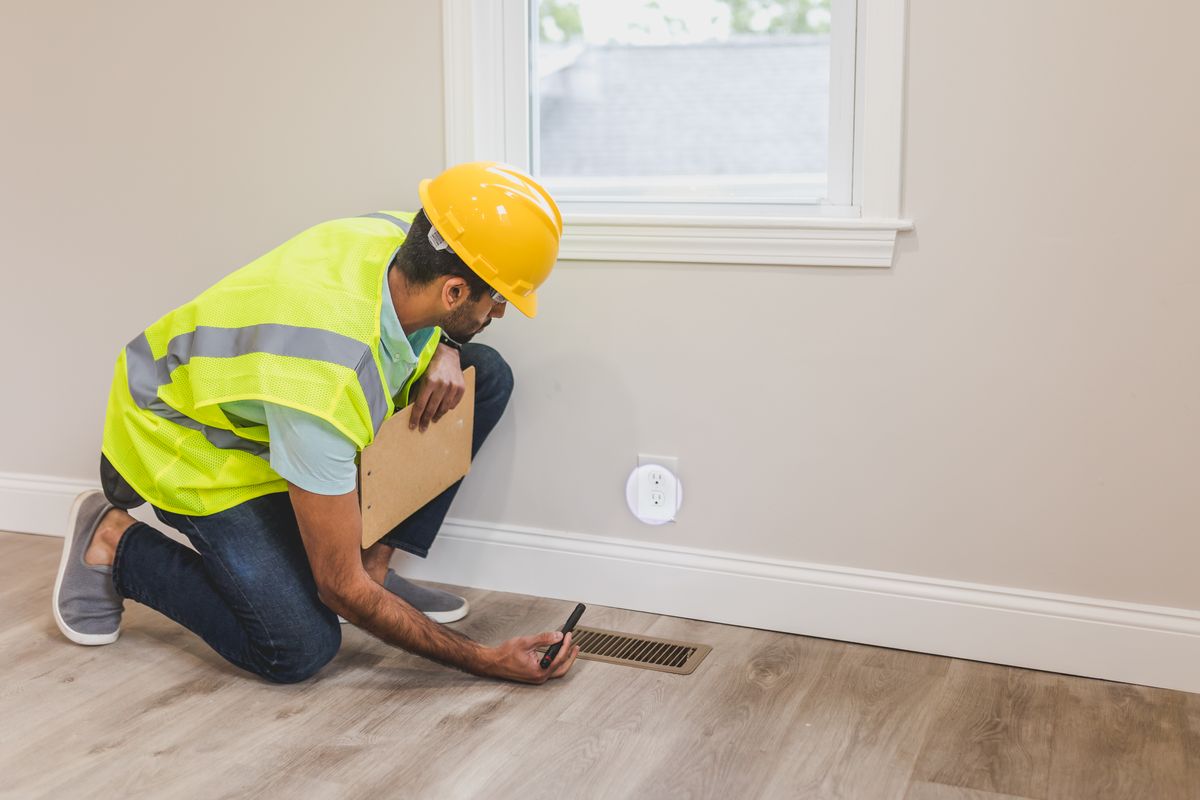
The most reliable tell in the trade: 9×9-inch vinyl tiles. That size was the industry standard when vinyl-asbestos tile ruled the market, and finding it under carpet or newer flooring in a pre-1980s home is close to a guarantee that testing is worth the money. Twelve-inch tiles and old sheet vinyl from the same era are suspect too — sheet vinyl's felt backing can be more friable than the tile itself — and the black "cutback" adhesive beneath any of them frequently contains asbestos even when the tile doesn't.
Intact vinyl-asbestos tile is non-friable and low-risk in place, which is why many Flagstaff remodels simply float new flooring over it. The moment plans involve grinding, sanding, bead-blasting, or prying up brittle tiles, testing decides whether that's a weekend job or an abatement contract. Sampling is easy — one tile corner and a dab of mastic from a closet or under an appliance.
Transite Siding, Roofing & Flues
Asbestos-cement products — widely known by the trade name transite — were sold as near-indestructible siding shingles, corrugated roofing, and flue pipes for furnaces and wood stoves. They earned the reputation: plenty of cabins around Williams, Parks, and Doney Park still wear their original gray cement shingles, often with a brittle, chalky surface and a faint wood-grain or wavy-edge pattern.
Because the asbestos is locked in cement, intact transite is non-friable and generally stays put safely. The risk shows up during exterior work: breaking panels during a re-side, drilling for fixtures, cutting an old flue, or power-washing weathered shingles can all release fibers. Testing confirms what the material is before a siding crew bids the job — and before anyone snaps a panel to "check."
Pipe & Duct Insulation: The One to Respect Most
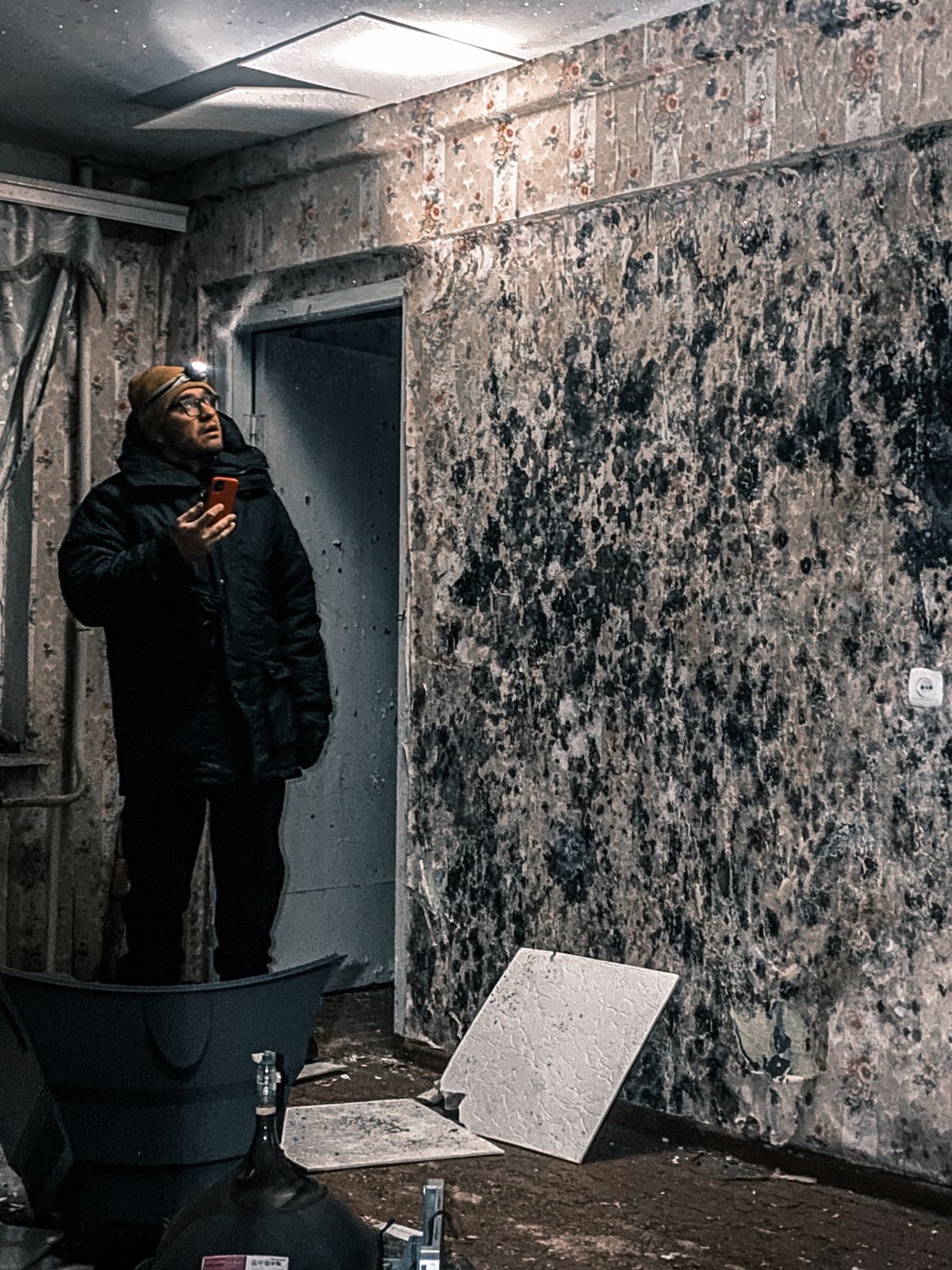
Thermal system insulation — the white or gray wrap on old steam and hot-water pipes, the corrugated "air-cell" cardboard-like layers, the hard plaster "mud" packed around elbows and joints, and old asbestos-paper duct wrap — is the most heavily regulated category for a reason. Unlike floor tile or transite, aged pipe insulation is often friable: it crumbles under hand pressure, and damaged sections shed fibers on their own. Flagstaff's older downtown commercial buildings, church and school boiler rooms, and pre-1960s homes with radiator heat are the usual places it turns up, frequently in basements and crawlspaces where it's been brushed past for decades.
- Don't sweep up debris under damaged pipe wrap — note it, photograph it from a distance, and leave it for the inspector.
- Don't tape or re-wrap it yourself; even "helpful" repairs disturb the material.
- Do test before plumbing or heating work. A plumber who has to cut into wrapped pipe needs the lab answer first — it determines the whole job plan.
One Visit, Every Material
These materials cluster in the same buildings, so our partner professionals commonly sample flooring, siding, pipe wrap, and ceiling texture in a single visit — one trip charge, one lab batch, one written report covering everything a remodel or sale will touch. Typical costs run from a couple hundred dollars for one material to the mid-hundreds for a multi-material inspection; the cost guide has full numbers. If the building is headed for major renovation or demolition, step up to a complete survey.
Flooring, Siding & Pipe FAQs
The 9×9 tiles are in great shape. Can I just leave them?
Often yes — intact vinyl-asbestos tile is routinely managed in place or covered with new flooring, and many flooring installers will float a product over it precisely to avoid disturbance. Testing still pays: it documents the situation for a future sale, and it tells you today what the rules are if a future project ever needs to remove it.
Can I power-wash or paint old cement shingle siding?
Painting intact transite with a brush or roller is generally considered low-risk and can help seal the surface. Power-washing, sanding, or scraping weathered asbestos-cement is a different story — abrasion of the deteriorated surface can release fibers. Test first, and if it's positive, keep all work non-abrasive.
My basement pipe wrap is falling apart. How urgent is this?
Damaged, crumbling thermal insulation is the scenario worth acting on promptly — not with panic, but with a phone call. Keep people and pets out of the immediate area, don't clean up the debris, and get it sampled. If it's positive, repair or removal by a licensed abatement contractor is a well-established, bounded project.
Does a negative tile test cover the glue underneath?
No — tile and mastic are separate materials and are sampled and reported separately. It's common for one to be positive and the other negative, which is exactly why an inspector samples both layers (and the leveling compound below, when present) before a flooring demo.
Get These Materials Answered
List what you've found — tile sizes, siding type, pipe wrap condition — and a certified, insured local testing professional will quote the sampling visit for free.
Or call and describe it; photos help too when the inspector follows up.
Renovating to sell? Buyers' inspectors will flag every one of these materials. Testing them yourself, first, keeps the negotiation anchored to facts instead of worst-case estimates.
Test the Classics Before You Touch Them
Tile, siding, and pipe wrap are the cheapest materials to sample — and the costliest to disturb blind.